
Sometimes a slightly provocative headline is necessary to attract attention. Please don’t take it too seriously. But it should be well known that the origin of my activities regarding horn development was dissatisfaction with these types of horns. Personally, I just couldn’t live with the fact that these horns consistently focus the sound extremely narrowly (beaming). There is more or less a very small sweet spot where you can experience the full spectrum of the music. If you move away from the sweet spot, the sound image collapse very quickly. What I have also noticed repeatedly as a negative aspect is that the on-axis listening experience is often very direct, tiring, or even annoying in the high-frequency range. As always, perception is subjective, and it may well be that there are people who explicitly like this. It is important to me to emphasize that I am not claiming that my opinion is the only valid one. Nevertheless, in this article, I would like to describe and also demonstrate with help of a BEM simulation why I have come to this conclusion and why I consider these horn types to be obsolete.
JMLC and SWH horns both have a single objective, which is acoustic loading. Traktrix is a drag curve that, for me, exhibits the most extreme beaming as a horn function. Modern horns should have both good acoustic loading and almost constant radiation in the horizontal and vertical planes, with a particular focus on the horizontal plane. To achieve this, a single horn function that is only optimized in terms of horn loading is not sufficient.
For this specific investigation, I selected a JMLC horn with a 425 Hz cut-off and an 1.4″ driver diameter:
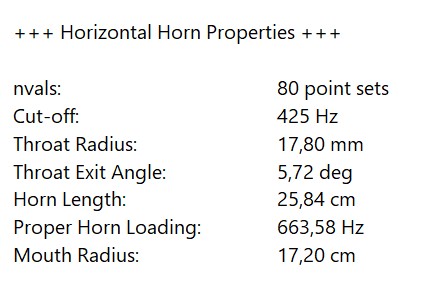
JMLC 425Hz horn properties.
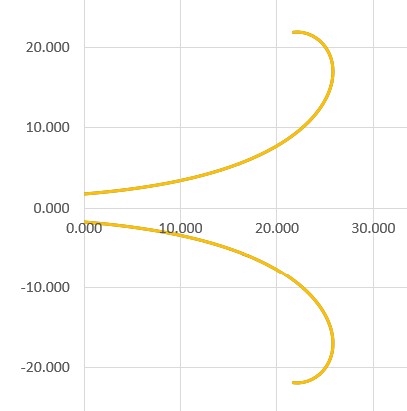
JMLC horn profile with 180° rollback.
For the BEM simulation with AKABAK, I first created a 3D model after the spline import by thicken the 2D surface by 20mm. This results in a realistic shape if the horn had been created with a 3D printer, for example. The BEM model consists of 3 parts: the horn up to the apex (middle) and the rollback from 90° to 180° plus the thickened outer parts (left). The interface (right) connects the two subdomains:
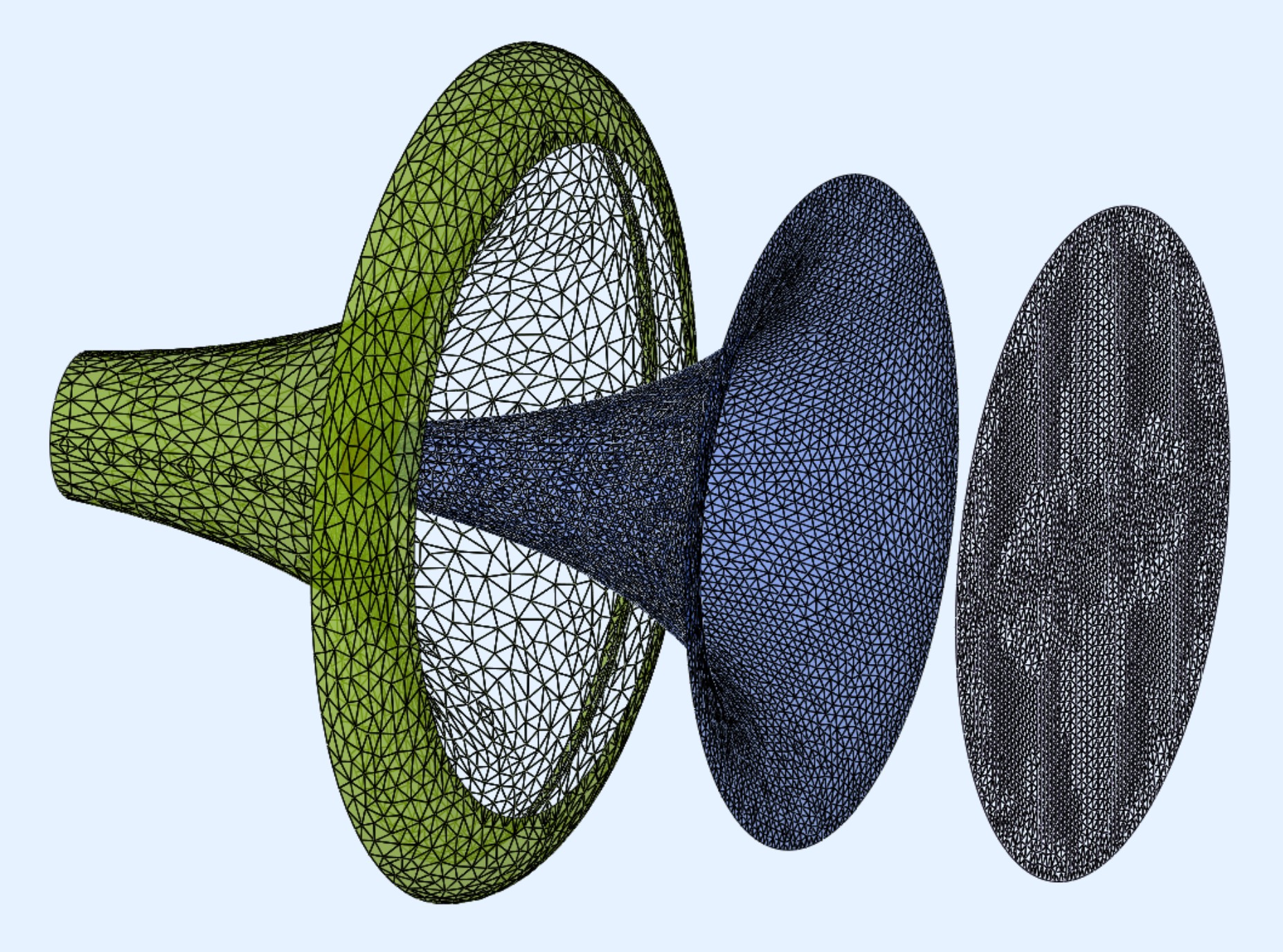
JMLC 425Hz BEM model shown as an exploded view.
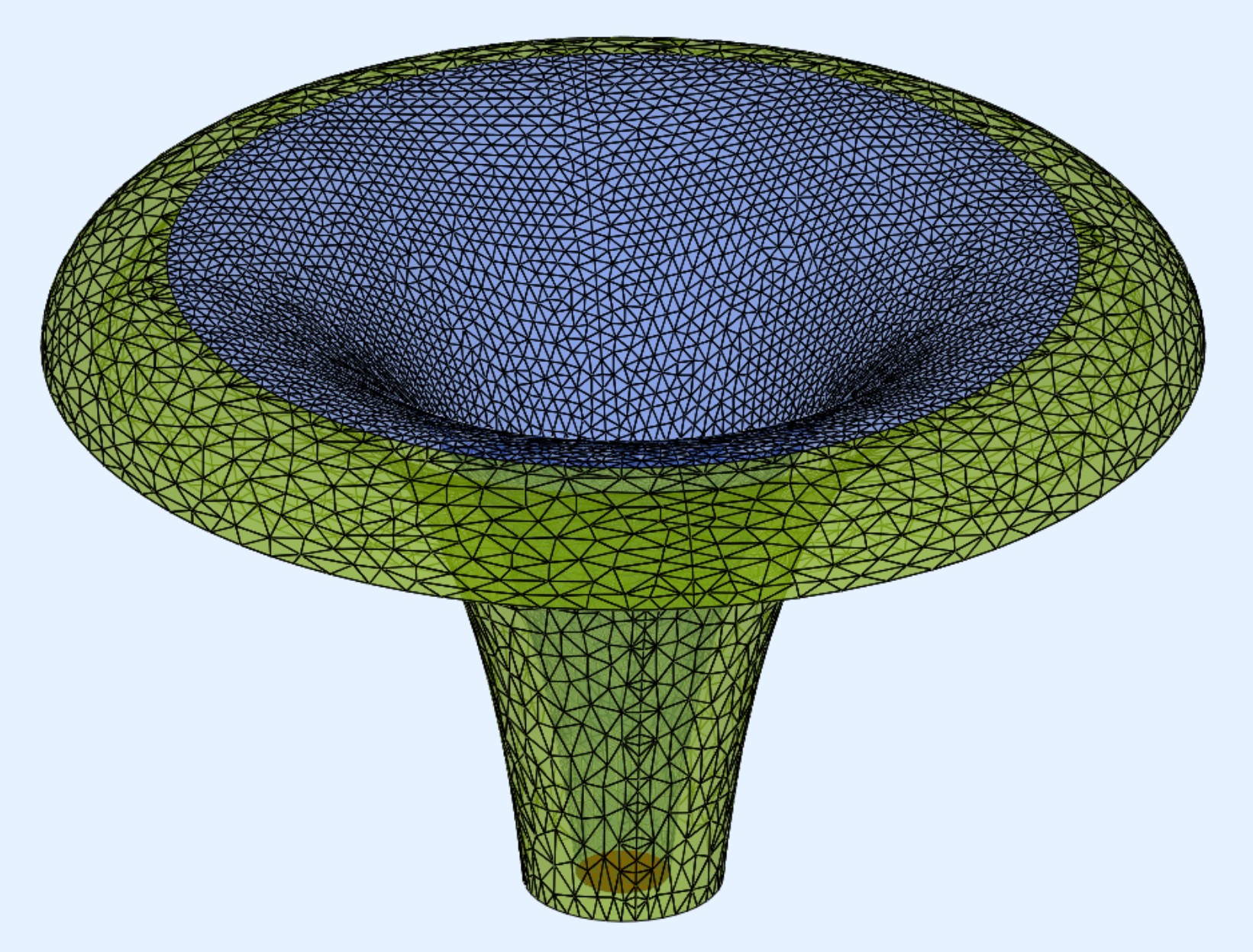
JMLC 425Hz BEM model.
One thing I think is important to mention is the integration waste that comes with rollback of the horn. It is essential part of the JMLC algorithm, and you need to integrate it, but if so there is a considerable increase of horn dimension:
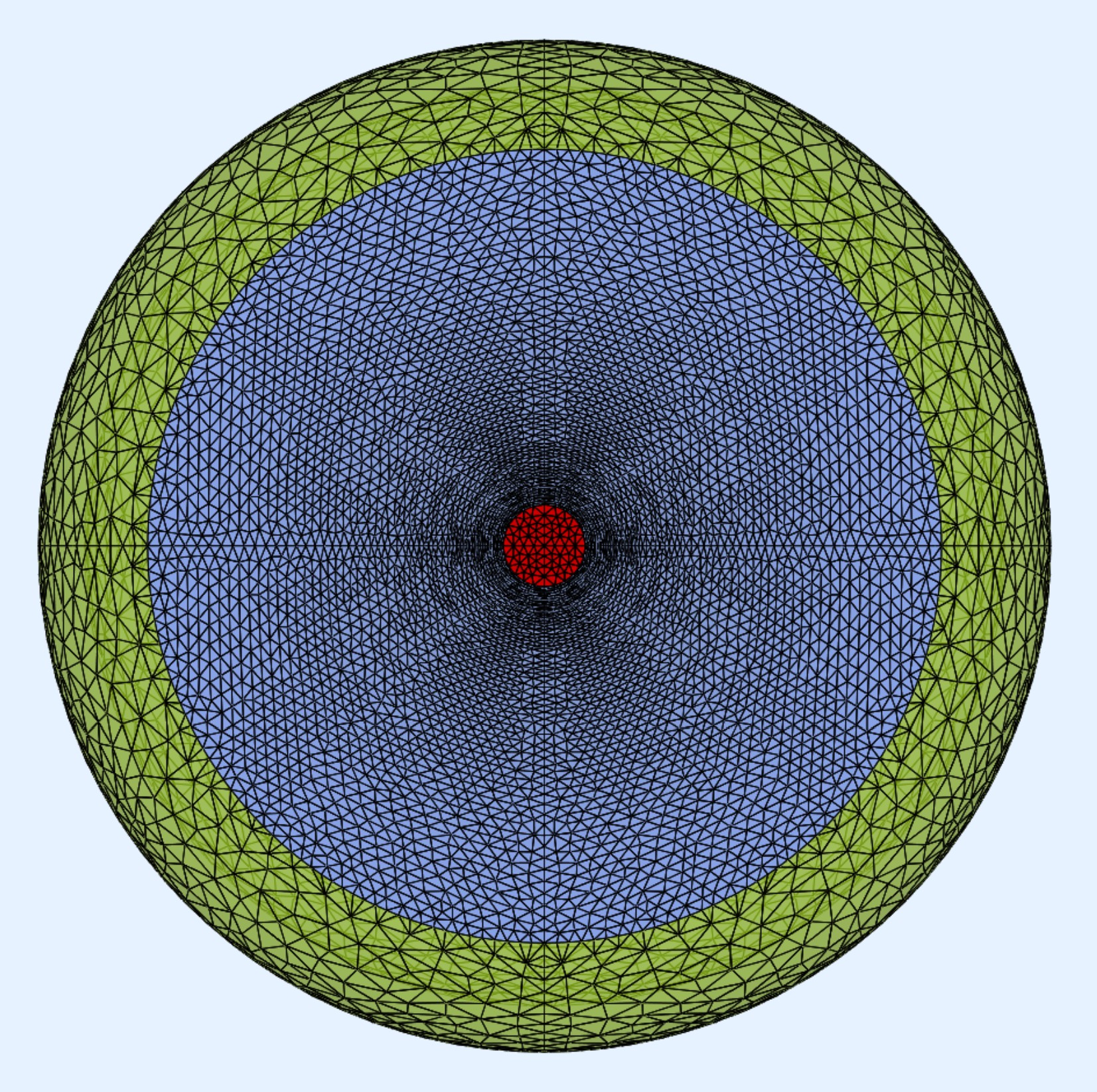
JMLC rollback “integration waste” (horn=blue, rollback=green)
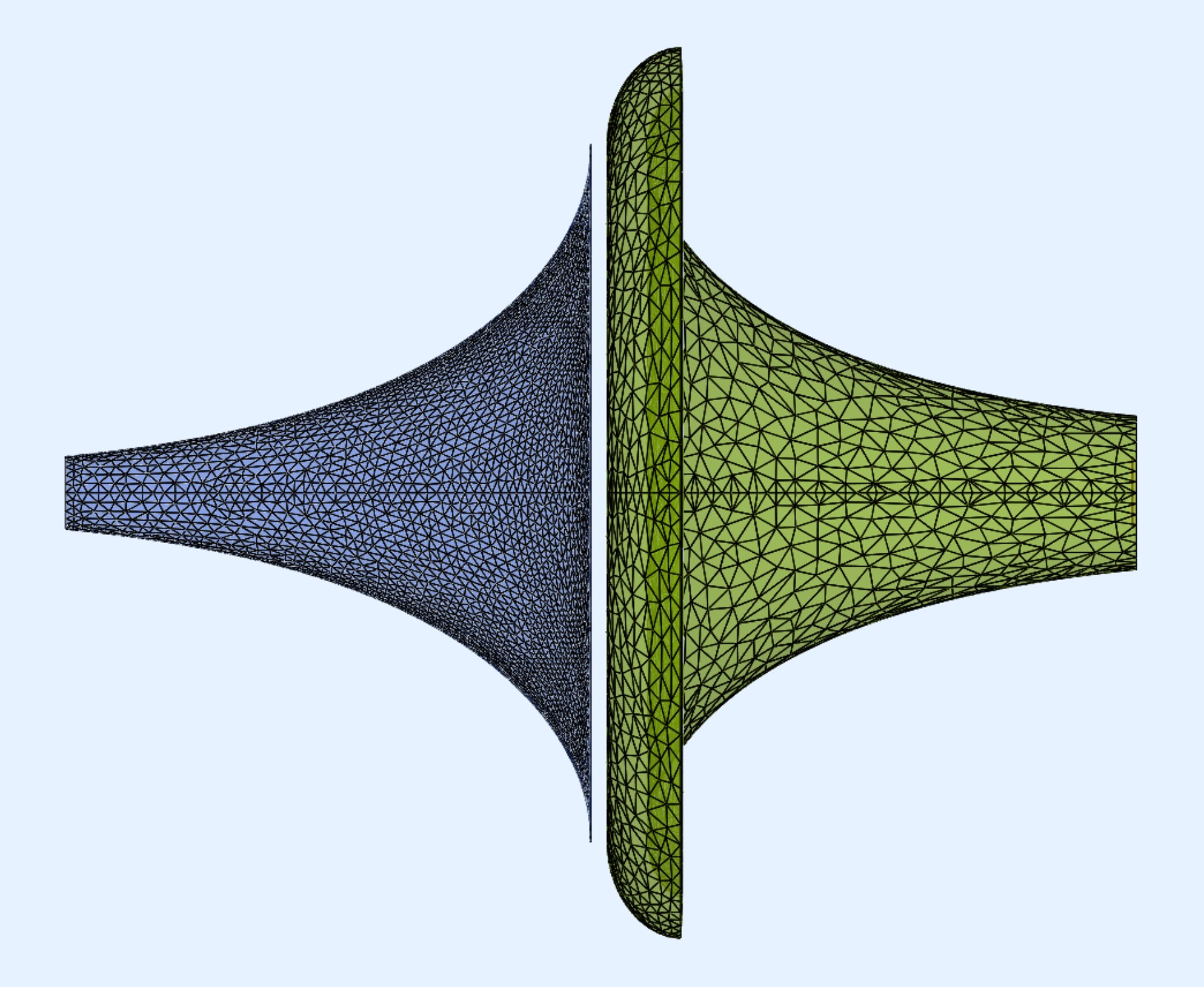
JMLC rollback “integration waste” (horn=blue, rollback=green)
Of course, the rollback has a positive effect on the properties, e.g., reduction of edge reflections. But the overall effect is minor compared to a horn that is terminated at 90° and almost the same effect could also be achieved with a significantly smaller round over.
Of course, we don’t need to discuss the excellent acoustic loading properties of this type of horn. But wait a minute, what exactly is the problem? Well, at for me, the radiation polar are unacceptable:
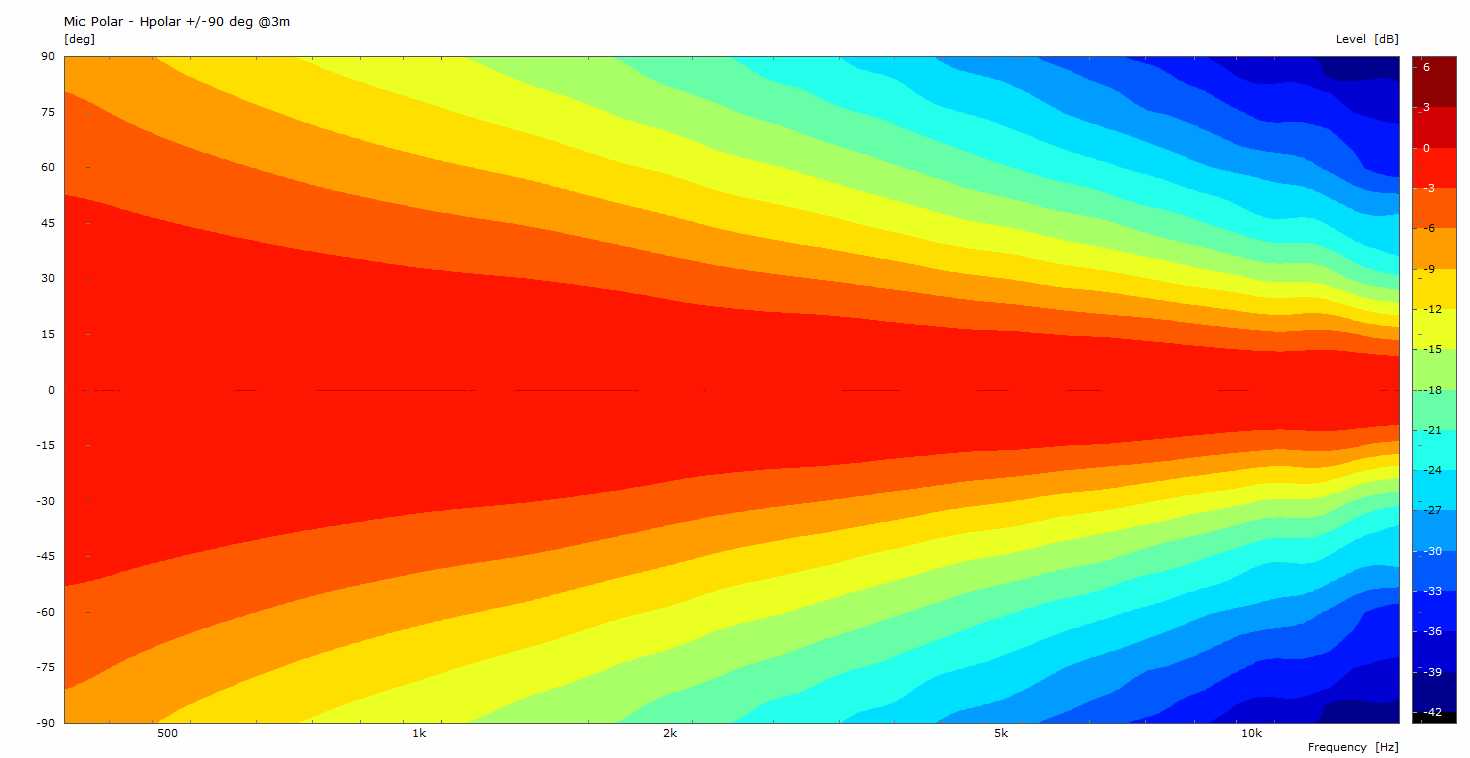
JMLC 425Hz radiation polar +-90°.
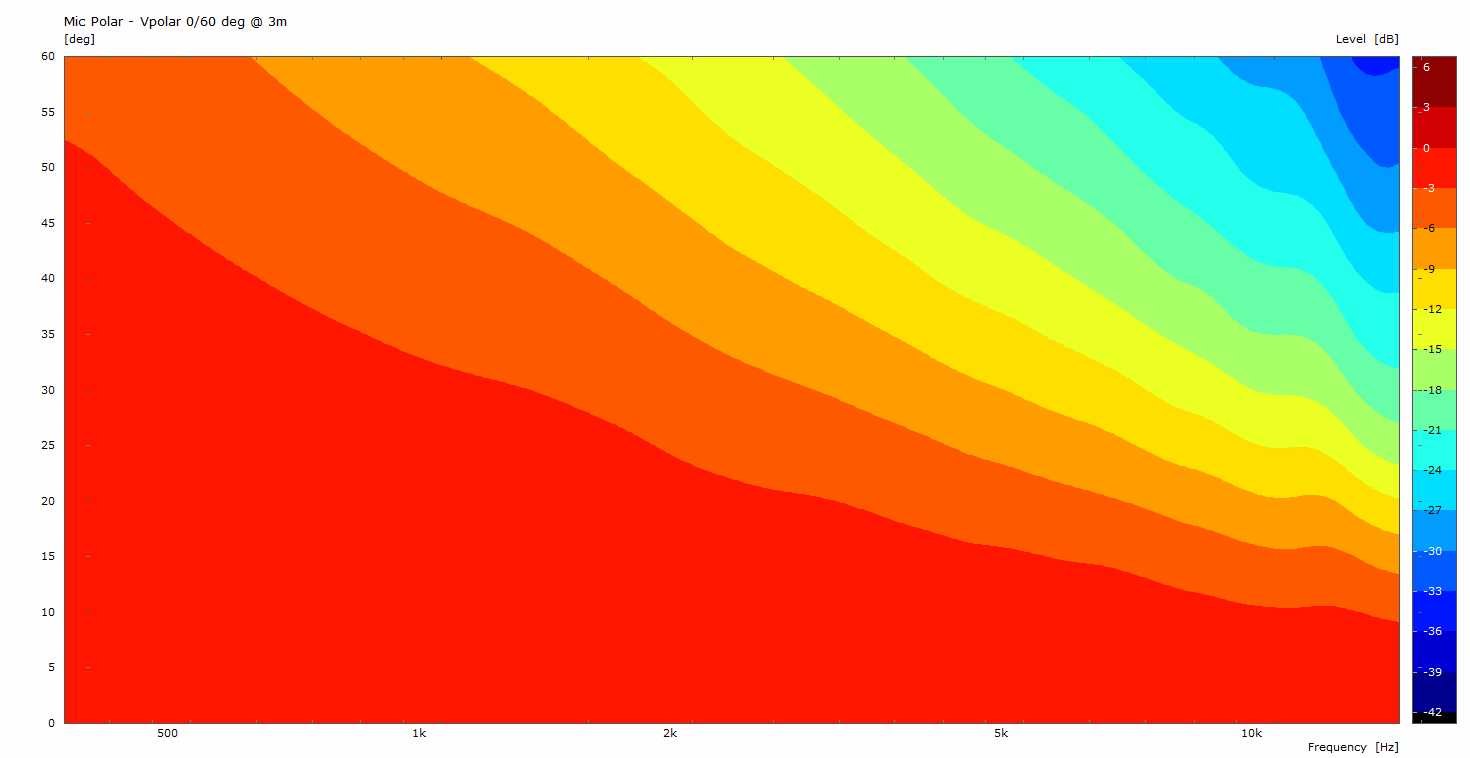
JMLC 425Hz radiation polar 60°.
This is a beaming horn! I would even call a strong beaming horn. The same we observe for spherical wave horn and Traktrix horn. The constantly increasing beaming towards high frequencies is one serious issue. The broad radiation towards lower frequencies the other because it takes place in all imaginary planes, i.e., also towards the floor and ceiling where we do not want it to be.
My own horn calculators tried to mitigate these issues by dividing the radiation into a major (horizontal) and minor radiation plane (vertical). Also, the use of PETF could improve directively control but at the cost of loss of acoustic loading. With the use of a good parameter set, the results could be significantly improved, but not even close as perfect as my final generation horns.
I find it remarkable how often my JMLC article has been read and how often the corresponding spreadsheet calculator has been downloaded. But why? Again, for me these types of round horns are obsolete because the overall results are imo no more acceptable for a modern horn speaker. And even worse, the larger these round horns become, the more they are beaming. So if you see such a speaker with one or more of these “trumpets of Jericho” at a show or somewhere else, just listen and judge yourself. For a modern exceptional horn speaker we need both, excellent acoustic loading and directively control for major and minor radiation plane.